The Hessdalen Phenomenon Overview
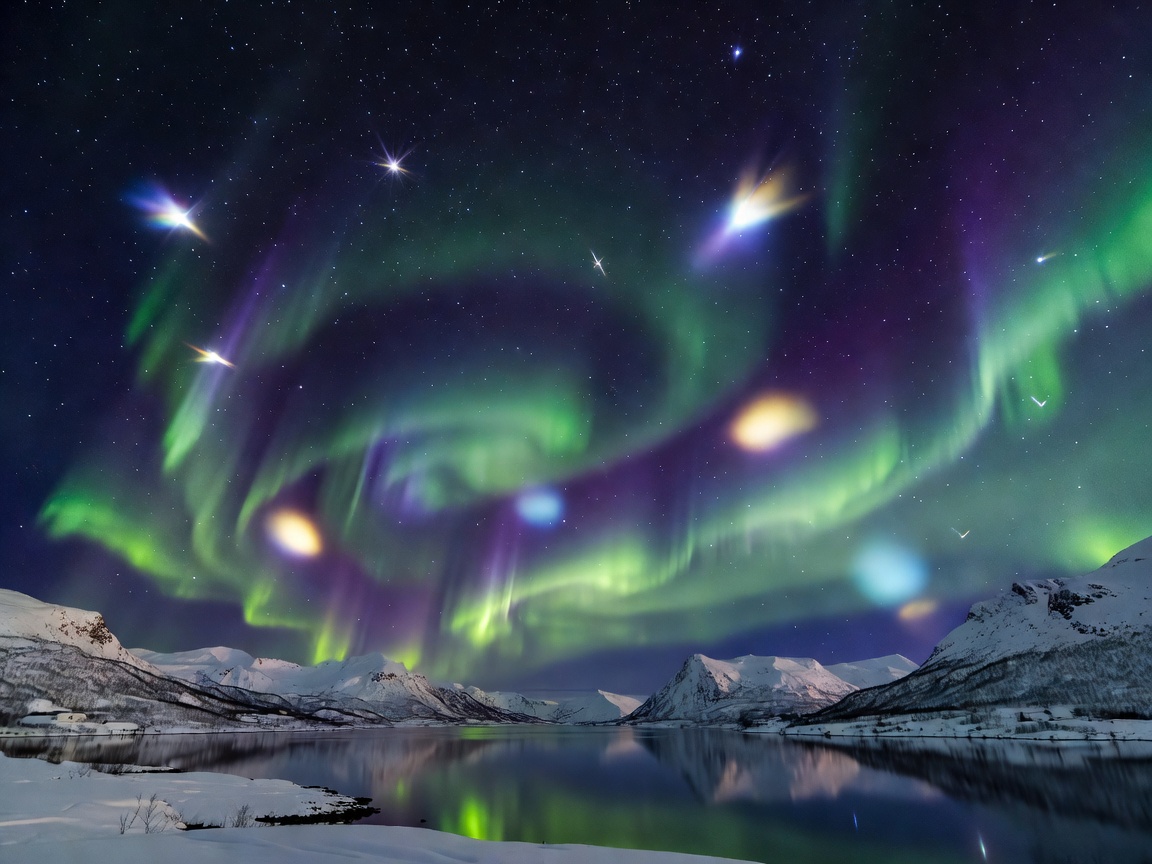
Since December 1981, residents of the 12-kilometer long Hessdalen Valley in Holtålen, Norway, have reported bright, mysterious light formations. At peak activity during the early 1980s, sightings occurred up to 15 to 20 times per week. The lights present as white or yellow glowing spheres floating at tree-top level or maneuvering at hypersonic speeds across the valley.
Project Hessdalen & Scientific Instrumentation
In 1983, researchers from Østfold University College and the University of Florence established "Project Hessdalen." Using automated optical cameras, radar systems, magnetometers, and spectrographs, scientists confirmed that the lights reflect radar signals and exhibit distinct spectral lines indicating burning oxygen, nitrogen, and scandium.
Geological Battery Hypothesis
One prominent theory suggests the valley functions as a giant natural battery. One side of the valley is rich in zinc and iron deposits, while the opposite side is rich in copper. Sulphuric river water flowing through ancient mine shafts may act as an electrolyte, discharging ionized plasma into the atmosphere when tectonic pressure peaks.
However, radar observations of solid core signatures and intelligent vector changes continue to challenge purely geological explanations, preserving Hessdalen's status as a paramount global anomaly hotspot.